
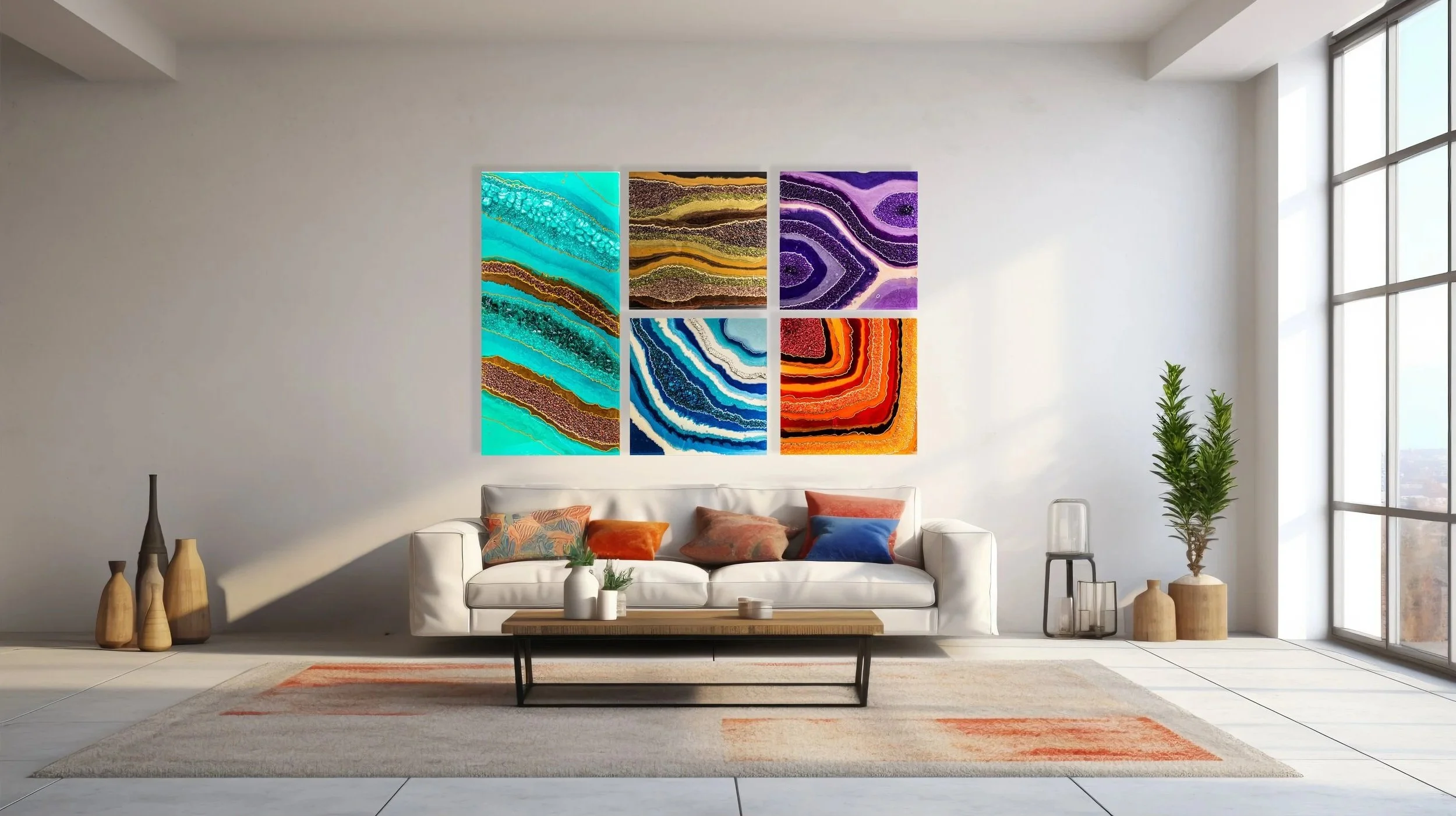
Divinity Within the Earth
Since the earliest moments of human history, healing has been sought through the sacred—through gestures that reach beyond the visible world toward forces believed to restore balance where it has been broken. In ancient Persia, devotion was directed toward the gods themselves: prayers whispered to Anahita for renewing waters, offerings left for Haoma’s regenerative growth, vows sworn beneath Mithra’s radiant witness. These deities did not merely preside over nature; they were nature, their presence embedded in riverbeds, fire, wind, and the soil beneath supplicants’ knees.
Persian mythology presents a cosmology of elemental beings—divinities of wisdom, war, fertility, time, and flame—whose influence shaped the universe long before humanity understood itself as separate from the world it inhabited. They were not distant or symbolic figures, but restorative forces as fundamental as mountains rising, rivers carving valleys, and earth holding memory through time.
This collection bridges myth and material, reimagining the Persian pantheon through the lens of the Earth itself. Like the deities they evoke, the earth is ancient, patient, and transformative. Its exterior may appear solid and inert, but within lie hidden processes of formation, accumulation, and slow refinement—crystalline structures, layered strata, and veins of mineral that quietly store energy and light. Each work in this series serves as a vessel for a deity’s enduring essence: divine power crystallized in mineral and glass, luminous energy preserved within matter, waiting to be unearthed. To engage with these works is to witness the sacred in its slow, patient becoming.
Rendered as wall-mounted sculptures, these pieces employ fractured glass to build dense, prismatic surfaces. Light moves across broken planes, activating each form as a living presence rather than a fixed image. Mythology and material converge into sacred geometry, where fracture becomes structure and matter becomes a site of remembrance, restoration, and continuity.
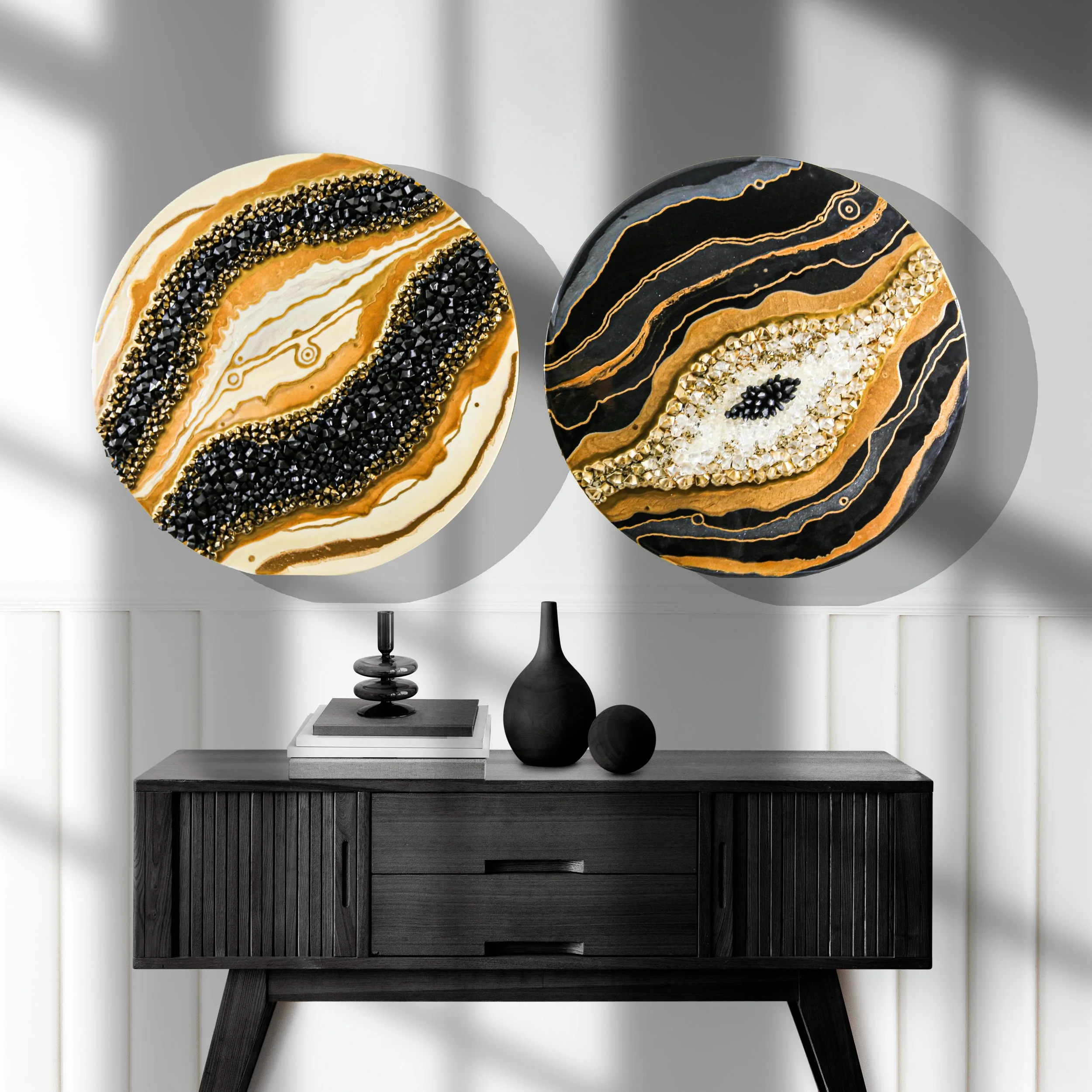
Ahura Mazda & Ahriman: The Primordial Duality
Ahura Mazda, principle of wisdom and light, and Ahriman, force of chaos and dissolution, embody one of humanity’s oldest insights: that existence is sustained through opposition. Their tension is not good versus evil, but the dynamic balance that allows life to endure and transform.
In ancient Persia, this duality structured ritual and daily life—eternal flames honored Ahura Mazda’s light, while prayers guarded against Ahriman’s influence.
This wall sculpture pair channels that vision through fractured surfaces and inner luminosity, echoing the hidden energy within earth and stone. Fracture becomes structure, shadow becomes form, and tension transforms into enduring presence.
Display note: Position in visual dialogue, allowing space for contemplation—their meaning emerges in the interval between them, as it did in the cosmos.
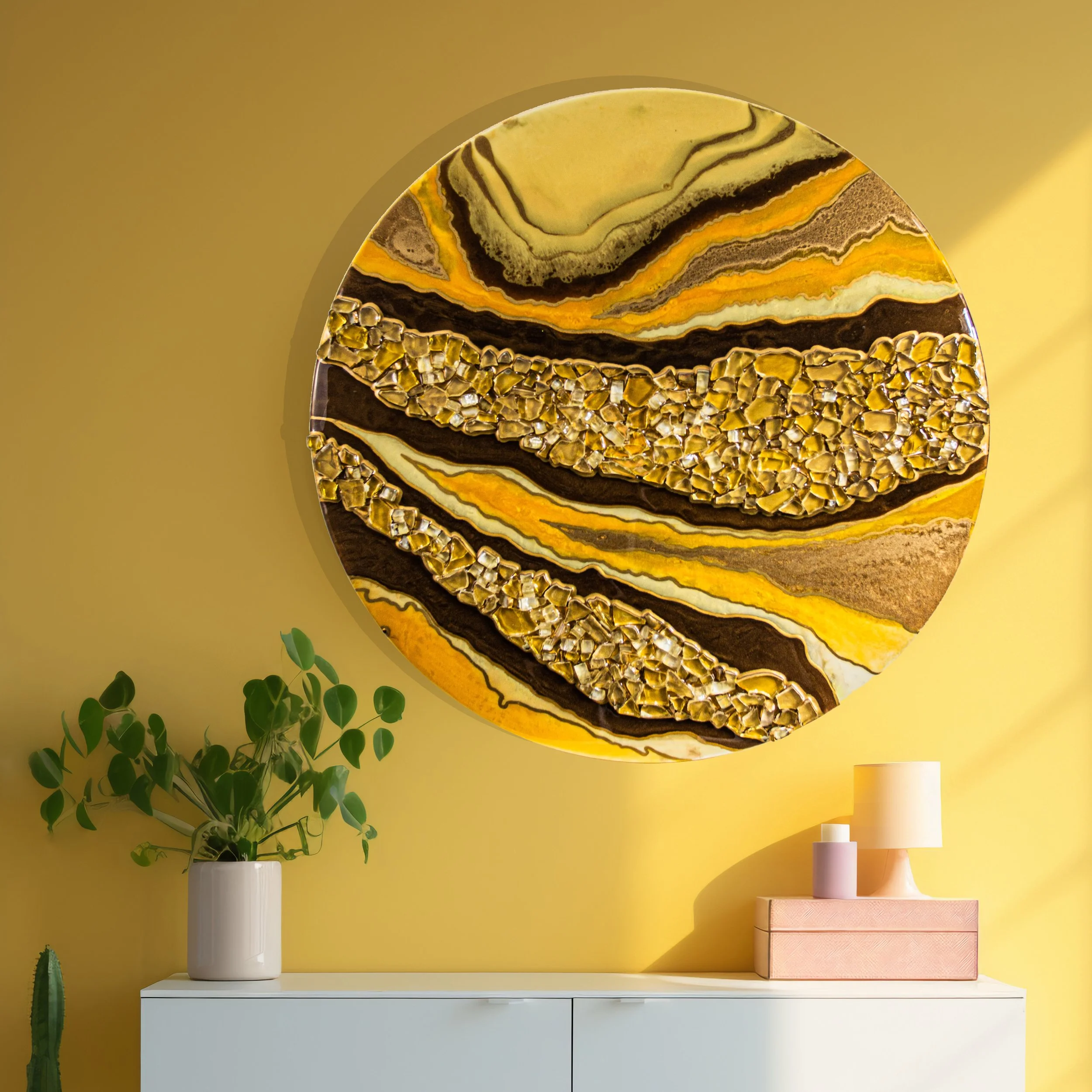
Mithra: Keeper of the Eternal Flame
Mithra, radiant guardian of truth and covenant, embodies the binding force between mortals and the divine. More than a solar deity, he represents integrity, justice, and the enduring promises that sustain life.
This wall sculpture captures Mithra’s dual nature: inner light reflects divine truth, while sharp, fractured surfaces suggest the precision and rigor of sacred law. The layered materials evoke mineral strata, transforming light into a presence that is both luminous and grounded—a reminder that sacred order emerges slowly, through endurance and care.
Display note: Position where sunlight can activate the inner surfaces, evoking the ancient experience of dawn devotion.
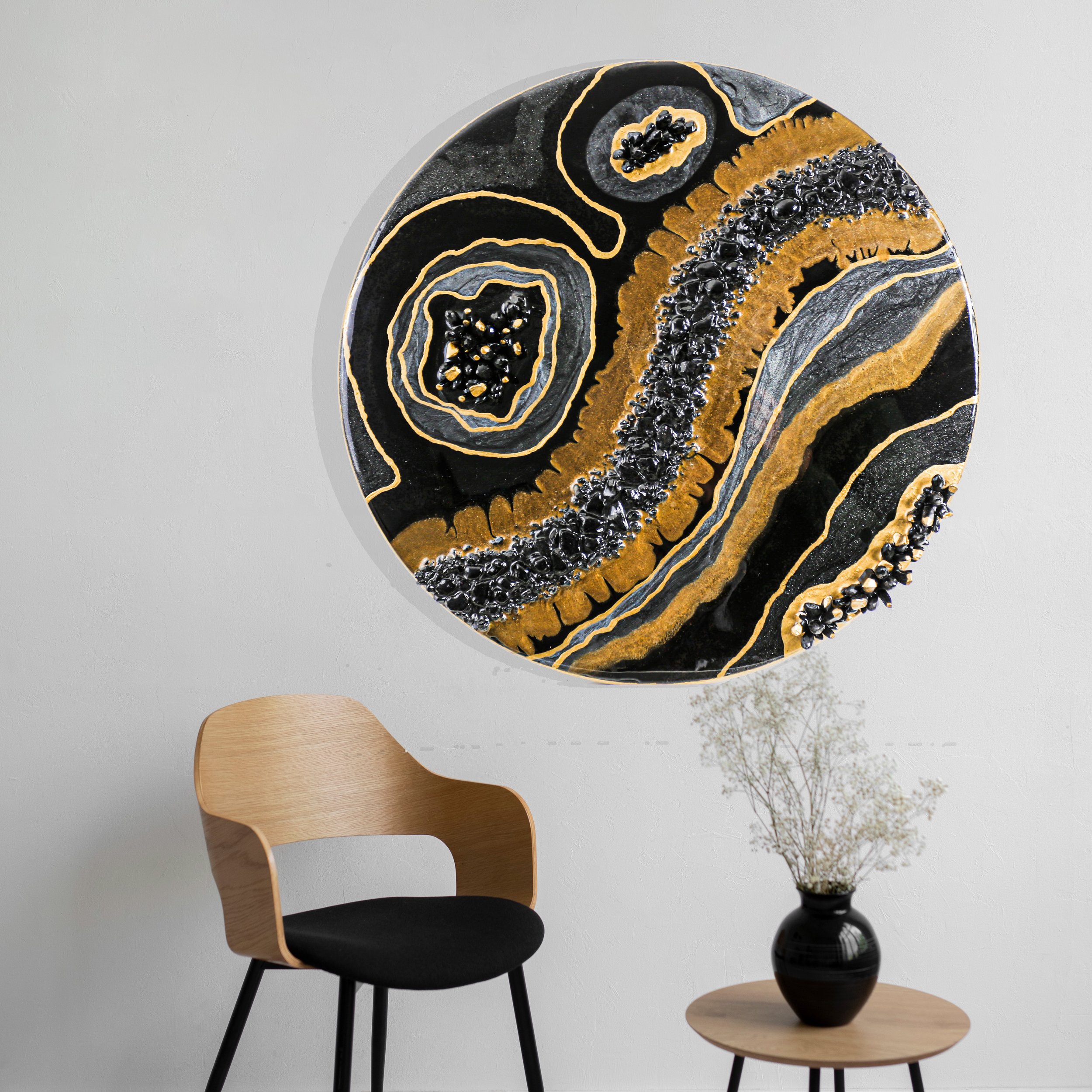
Zurvan: The Infinite That Birthed Time
Zurvan, the primordial void, existed before light and darkness, before creation itself. Neither god nor force alone, Zurvan is the container of all possibility—the source from which order and chaos, life and death, emerge.
This wall sculpture embodies that boundless essence through smooth planes that dissolve into fractured textures and mirrored surfaces that shift with perspective. Dense stone anchors fragile glass, suggesting the weight of eternity and the slow, patient formation of existence within the earth itself.
Display note: Install where shifting light can move across the surfaces, evoking the “eternal hour” before creation and revealing the latent energy held within matter.
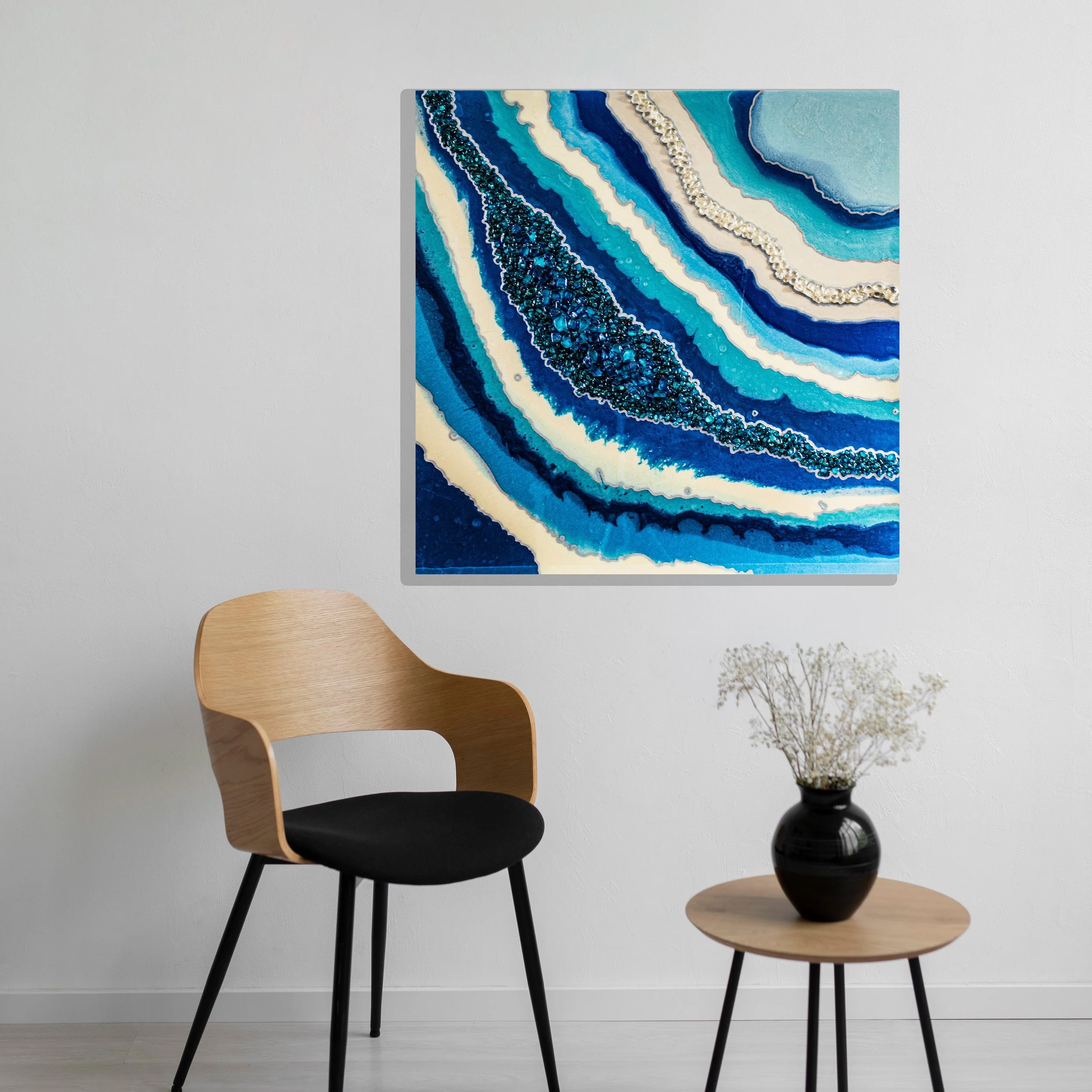
Anahita: The Uncontained
Anahita is the divine force of water in motion—source of fertility, purification, and renewal. In Persian cosmology, her waters sustain life, legitimize rule, and restore balance between body, land, and sky.
This sculpture evokes Anahita through flowing, layered surfaces that suggest movement held within form. Fractured glass and mineral tones echo riverbeds and subterranean currents, while an illuminated interior recalls water’s capacity to cleanse without erasing—carrying memory as it heals.
Display note: Orient toward a natural or architectural source of water, allowing reflected light to animate the surface and emphasize Anahita’s continuous flow.
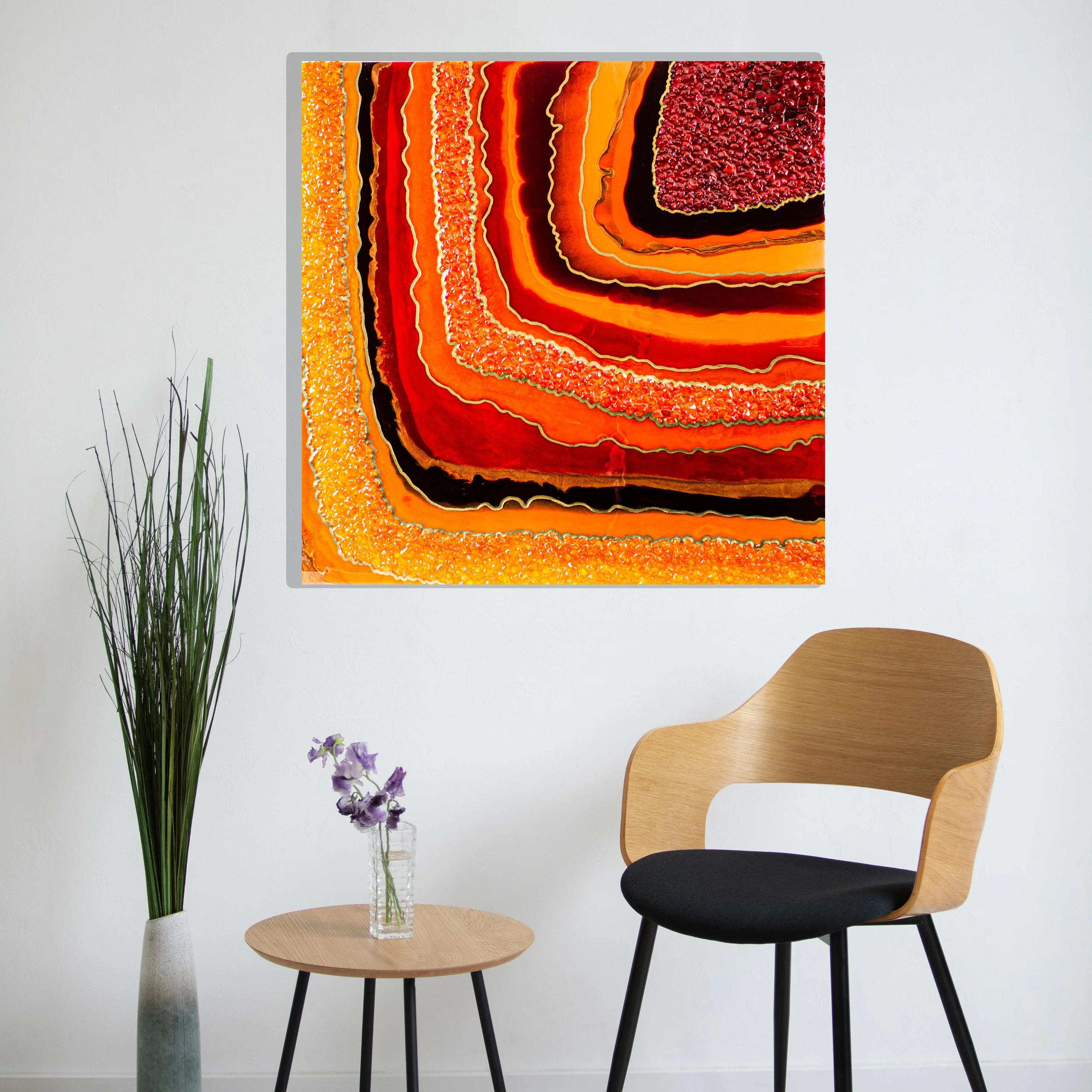
Atar: The God That Is Fire
Atar is not a god of fire, but fire itself—an elemental presence embodying truth, purification, and judgment. In Persian belief, flame is a living force through which order is revealed and corruption is burned away.
This sculpture channels Atar through sharp fractures and concentrated inner light, suggesting heat held within earth and mineral. The material resists softness: illumination cuts through structure, echoing fire’s capacity to clarify, refine, and restore through destruction.
Display note: Install away from direct flame. Atar requires no imitation—only witness.
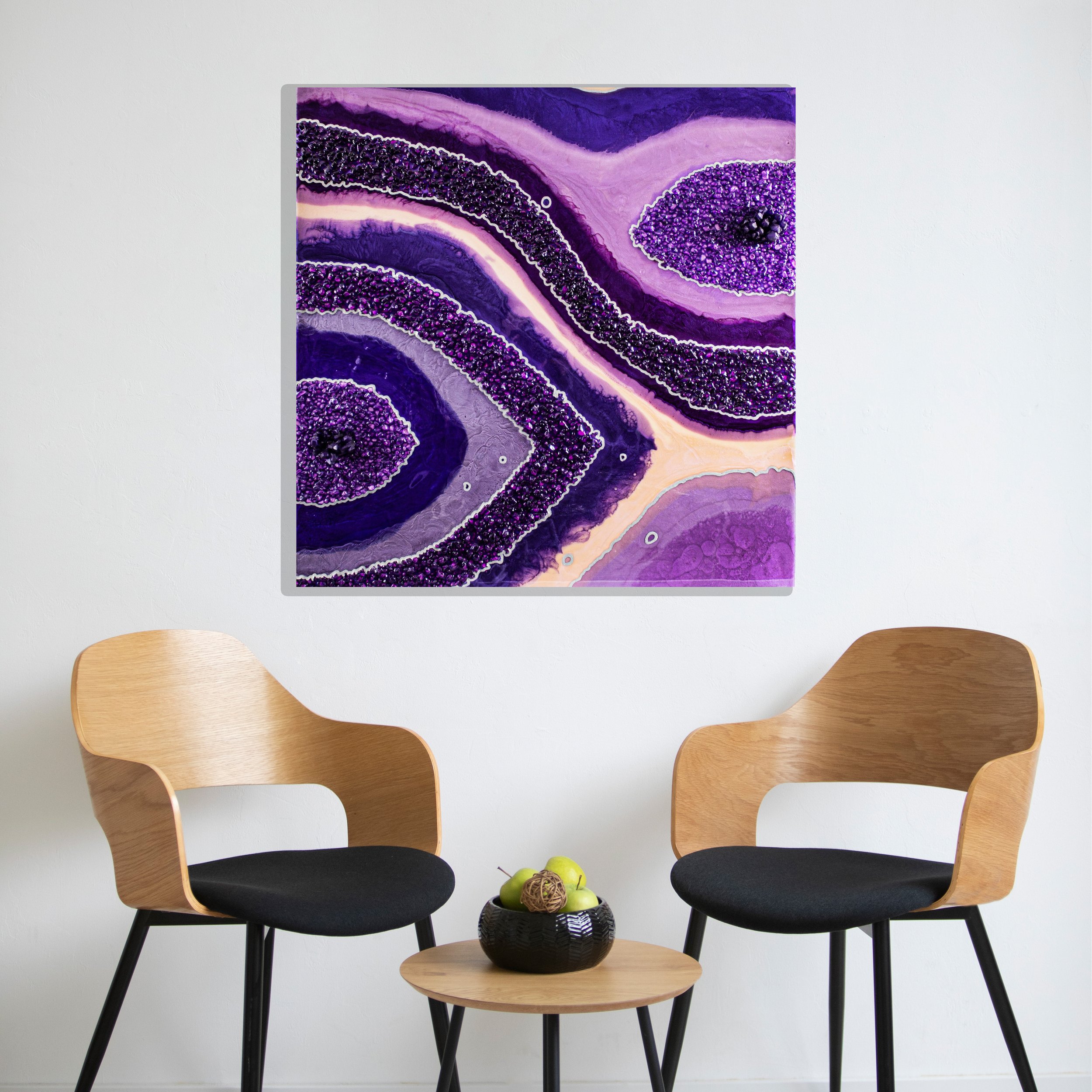
Vayu: The Breath Between Worlds
Vayu embodies movement itself—the invisible force that animates life and carries it away. Neither wholly benevolent nor destructive, he exists in the threshold between birth and death, presence and absence.
This sculpture resists solidity. Open fractures and suspended planes create a sense of instability, allowing air and light to pass through the form. The work is shaped as much by absence as by material, echoing Vayu’s role as the breath that moves through all bodies and the space that separates them.
Display note: Install where natural air currents can subtly activate the piece. Vayu does not tolerate stillness.
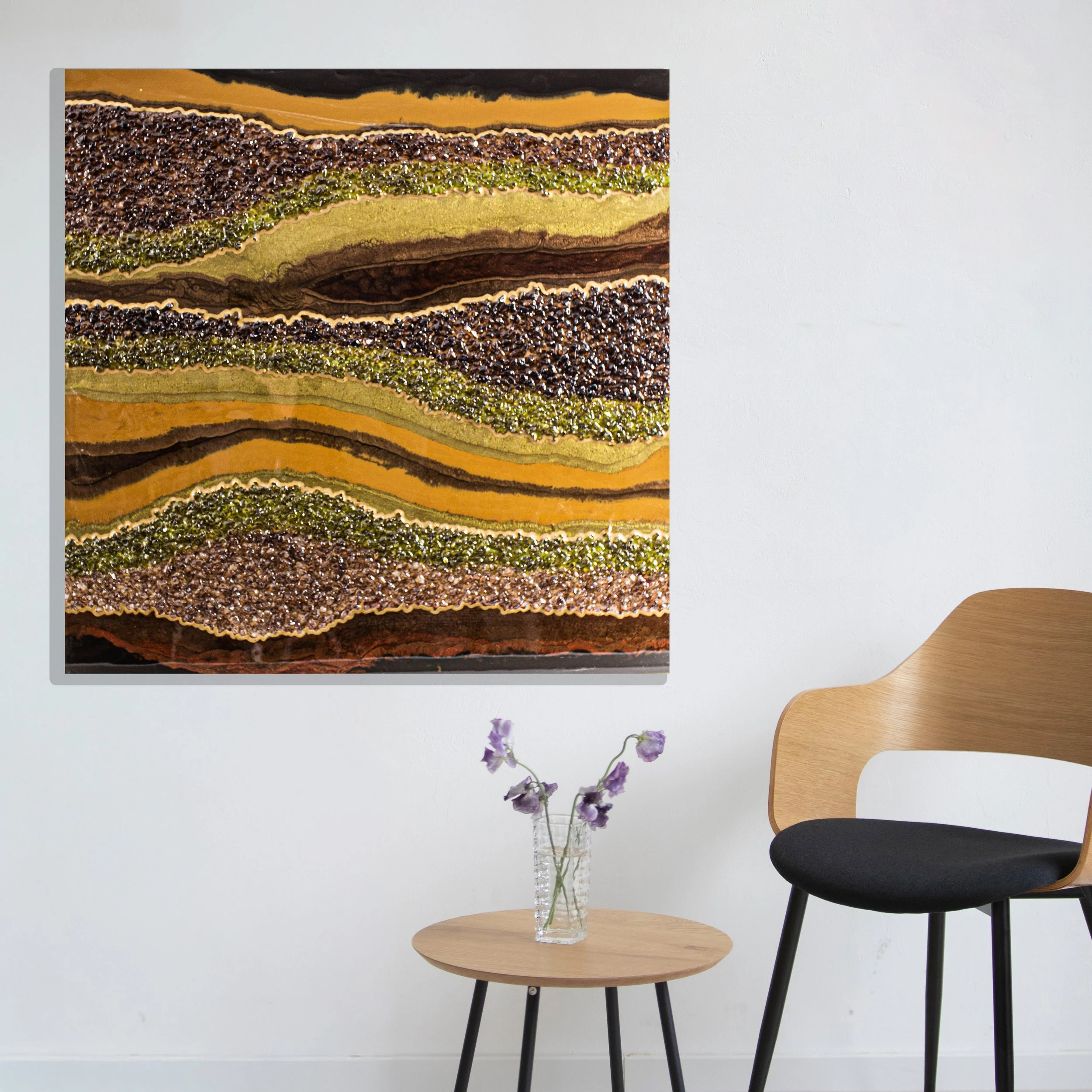
Zamyad: The Mountain That Walks
Zamyad is the embodiment of the earth’s strength—the force that raises mountains, bears kingdoms, and preserves divine glory beneath its surface. In Persian cosmology, he holds what endures and releases it only when the land itself allows.
This sculpture emphasizes mass and stratification. Layered materials echo geological buildup, while a concealed light suggests latent power held deep within the earth. The form communicates stability, patience, and the slow labor of preservation—earth as both witness and keeper.
Display note: Install low on the wall so the viewer must look upward, reinforcing Zamyad’s role as foundation and support.
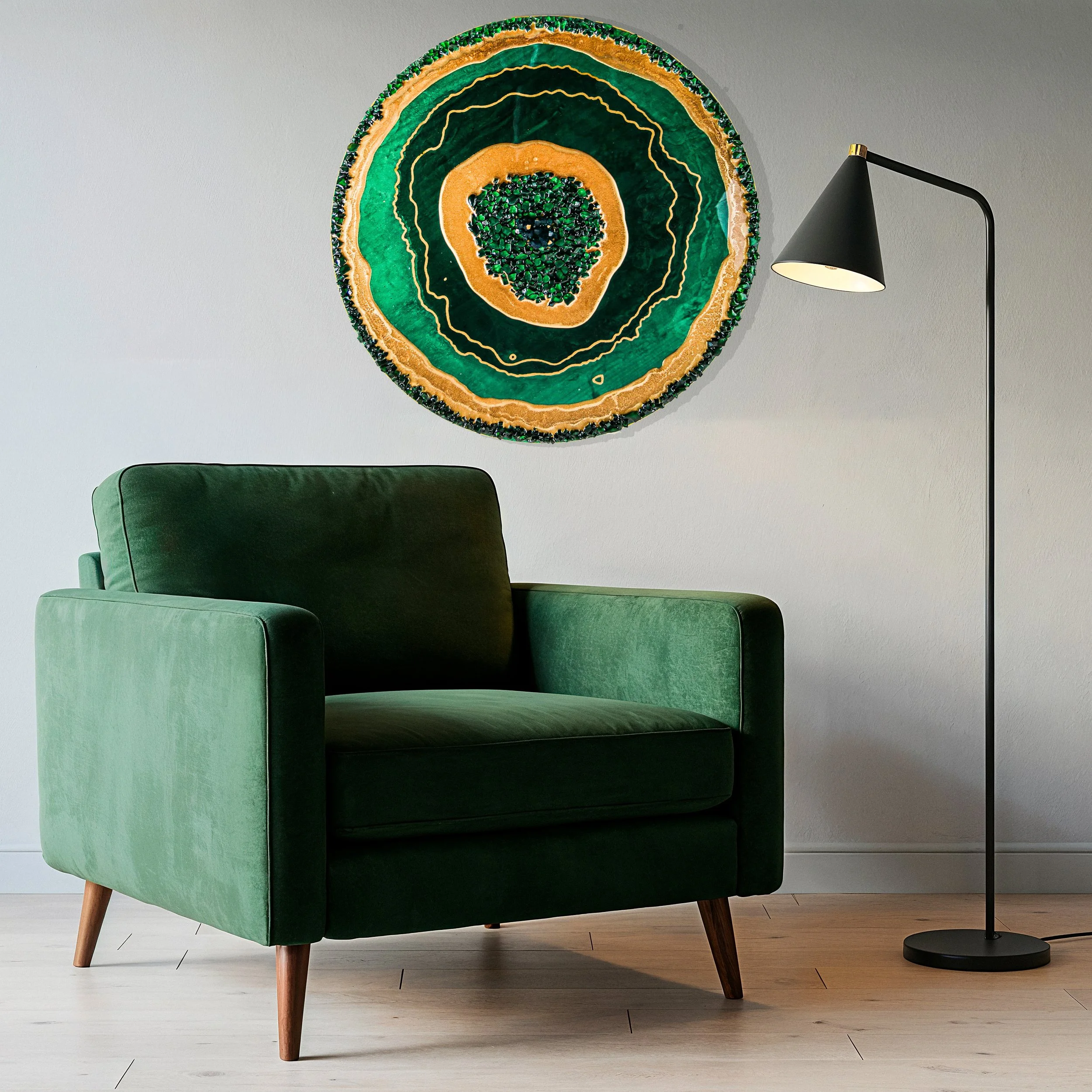
Spenta Armaiti: Sacred Growth
Spenta Armaiti is the spirit of earth’s gentleness—goddess of plants, cultivation, and devoted care. She embodies growth not as force, but as patience: the slow, ethical tending that allows life to take root.
This sculpture emphasizes softness within structure. Layered, sediment-like forms suggest soil compressed over time, while subtle luminosity emerges from within, recalling seeds germinating beneath the surface. Fracture here is minimal, absorbed into form, reflecting Spenta Armaiti’s role as healer through steadiness rather than intervention.
She represents restoration through responsibility—the belief that the earth responds to care, and that healing begins with how one inhabits the land.
Display note: Install near ground level or adjacent to natural light, reinforcing her association with cultivation, humility, and sustained growth.
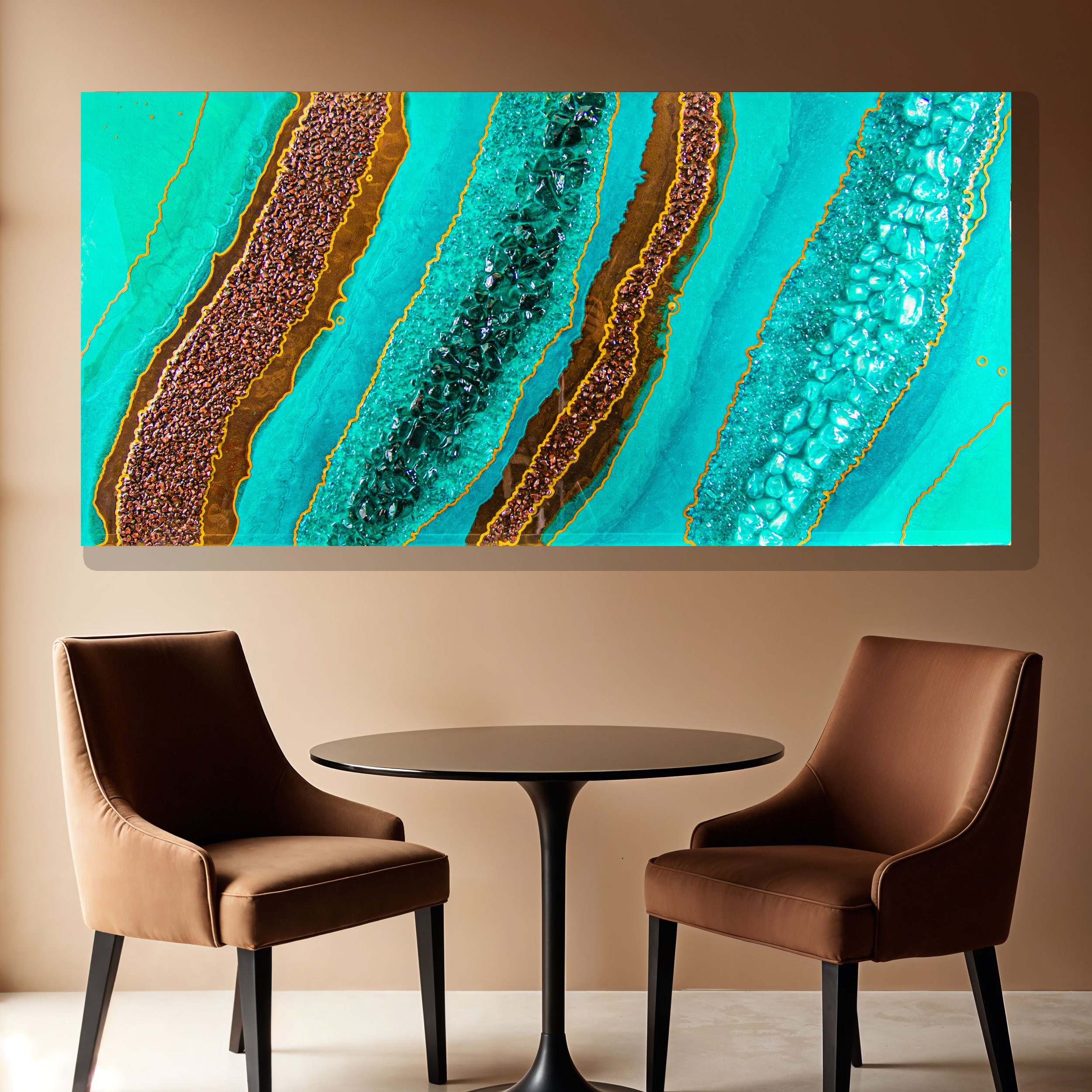
Tir (Tishtar): The God of Rain and Yield
Tir governs rain as necessity rather than excess—the precise falling of water that allows fields to endure and crops to rise. In Persian cosmology, rainfall is not guaranteed; it arrives only when balance is restored between human action and the earth that sustains it.
This sculpture holds the tension between drought and release. Directional fractures suggest rain carried across land, while a contained inner light evokes moisture held within soil before it surfaces. The form reflects agriculture’s dependence on timing, restraint, and right measure—rain not as spectacle, but as survival.
Here, rain is an act of correction. It restores fertility to exhausted ground, renews growth without erasing what came before, and binds the labor of farming to cosmic order.
Display note: Install where light can move gradually across the surface, echoing seasonal cycles and the slow return of rain to cultivated land.